Almost everyone has lived some version of the same story: a project that felt like a two-week job stretches into two months, a “quick errand” eats an entire afternoon, a home renovation estimated at three weeks finishes closer to three months. What’s strange isn’t that any single estimate goes wrong — it’s that people keep making the same kind of overly optimistic estimate over and over, project after project, without the pattern ever fully correcting itself. That predictable, repeated underestimation has a name: the planning fallacy.
Quick answer: The planning fallacy is our tendency to underestimate how long tasks will take, even when we know similar tasks ran late before. It happens because we plan from a best-case ‘inside view’ of the task and ignore how long comparable projects actually took. Using past data as a baseline fixes much of the gap.
What the Planning Fallacy Actually Is
The planning fallacy describes the tendency to underestimate how long a task will take, even when someone has direct personal experience with similar tasks running over before. It isn’t simple carelessness or bad math — people making these estimates are often quite deliberate and thoughtful about the calculation. The distortion comes from what information gets used to make the estimate in the first place, not from the arithmetic applied to it.
Why Experience Doesn’t Automatically Fix It
One of the most counterintuitive findings in this research is that having personally experienced past overruns doesn’t reliably improve future estimates. Someone can accurately recall that their last three projects all ran long and still confidently predict that this next one will finish on time. This happens because people tend to construct estimates by imagining the specific steps of the current plan unfolding smoothly, rather than by consulting the statistical track record of how similar plans have actually gone. The plan in your head has no traffic jams, no scope changes, and no sick days — reality reliably does.
The Inside View vs. The Outside View
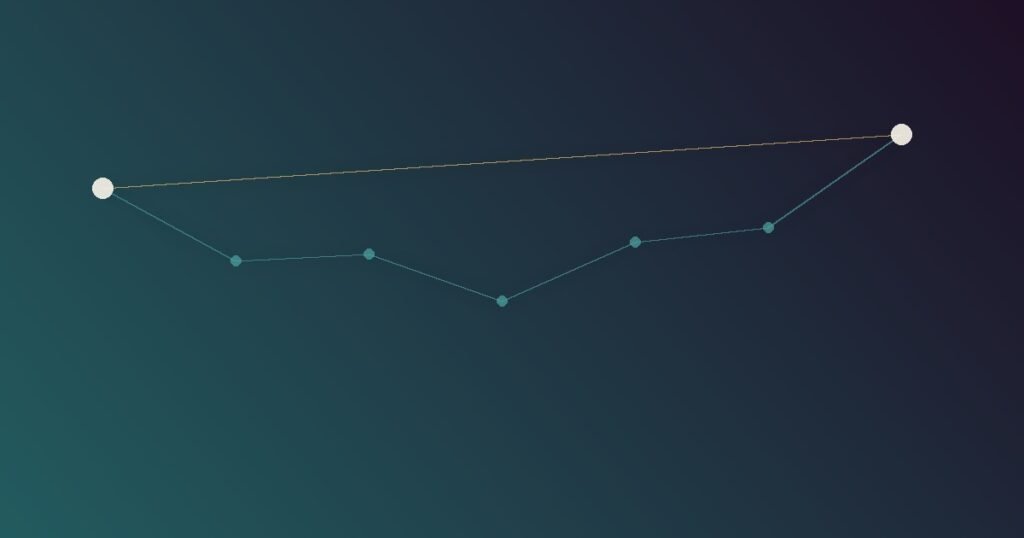
Researchers describe the flawed approach as the “inside view” — estimating by focusing on the specifics of this particular plan and imagining it executing as intended. The far more accurate alternative is the “outside view”: ignoring the specifics of the current plan entirely and instead asking how long similar projects have taken in the past, across other people and other attempts. The outside view feels less personal and less precise, which is exactly why people resist using it — but it consistently produces better estimates than even careful inside-view planning, because it’s grounded in what actually happens rather than what’s intended to happen.
Why This Matters Beyond Scheduling
The planning fallacy has consequences well beyond mild scheduling inconvenience. Underestimated timelines compound into underestimated budgets, overcommitted calendars, and a recurring sense of falling behind that isn’t really about working slowly — it’s about the starting estimate being unrealistic from the outset. Large public infrastructure projects are famous for planning fallacy overruns, but the same mechanism shows up identically in personal to-do lists, freelance quotes, and academic deadlines, just at a smaller scale and with less public scrutiny.

What Actually Helps
Use the outside view deliberately. Before estimating, ask how long the last few similar tasks actually took — not how long this one feels like it should take.
Add a buffer as a rule, not an afterthought. Since the bias is systematic and predictable, a fixed multiplier (many people find 1.5x a reasonable starting point) corrects for it more reliably than trying to “estimate better” each time.
Break tasks into smaller pieces. Large single estimates hide more unaccounted-for steps than a list of smaller, individually estimated ones.
Expect the unexpected as a category, even if not a specifics. You can’t predict which interruption will happen, but you can reliably predict that some interruption will — build room for it accordingly.
The Takeaway
The planning fallacy persists not because people are bad at planning, but because the natural way of estimating — imagining this specific plan succeeding smoothly — systematically ignores the messier statistical reality of how projects like it have actually gone before. Trading the inside view for the outside view is a small shift in method with an outsized effect on accuracy, and it’s one of the rare cognitive biases with a genuinely simple, practical fix.
Frequently Asked Questions
What is the planning fallacy?
The planning fallacy, described by Daniel Kahneman and Amos Tversky, is the tendency to underestimate the time, cost and risk of future tasks while overestimating their benefits, even when past experience suggests otherwise.
Why do we underestimate how long things take?
We imagine the task going smoothly step by step and overlook interruptions, delays and unknowns. Optimism, pressure to look capable and the vividness of the plan all push estimates toward the best case.
How can I estimate time more accurately?
Use the outside view: check how long similar tasks really took in the past, break work into smaller pieces, add a realistic buffer, and track actual versus estimated time so your future estimates improve.
Related Reading
- Why Your Brain Procrastinates (And How to Actually Stop)
- Why Perfectionism Is Fear Wearing a Productivity Costume
- The Sunk Cost Fallacy: Why We Keep Throwing Good Money After Bad
This article is part of Pattern Decoded’s ongoing series on the psychology and neuroscience of everyday behavior.
Pingback: Cognitive Biases Explained: 12 Mental Shortcuts That Shape Your Decisions - Pattern Decoded